Modern Interior Design Ideas That Still Feel Warm, Livable & Tactile
The archetype of the sterile white-box modern interior—characterized by glossy surfaces, sharp chrome edges, and unyielding leather furniture—is firmly in the past. Today’s most enduring residential design movement is Warm Modernism (frequently informed by Scandinavian "hygge" and Japanese "wabi-sabi"). This aesthetic embraces minimal clutter and clean spatial geometries, but balances them with tactile organic materials, natural timber finishes, curved ergonomic profiles, and soft ambient lighting. The outcome is a home that feels open, refined, and exceptionally comfortable for everyday living.
Layering Tactility: The Antidote to Sterile Surfaces
When color palettes are kept restrained and minimalist, texture must take over as the primary visual interest. A room painted in monochromatic warm cream can feel remarkably luxurious if it features five contrasting surface textures:
- Natural Open-Grain Wood: White oak, walnut, or ash with matte penetrating oil finishes rather than high-gloss polyurethane.
- Textured Wovens: Chunky wool bouclé, slubbed Belgian linen, and ribbed corduroy upholstery.
- Honed Minerals: Matte travertine, brushed limestone, or soapstone with softened, bullnose edges.
- Handcrafted Ceramics: Terracotta, unglazed stoneware, and zellige tiles with subtle surface irregularities that catch grazing light.
- Warm Metals: Brushed brass, patinated bronze, or oil-rubbed blackened steel instead of high-polish chrome.
Softening Geometry with Curved Profiles & Organic Lines
Traditional rigid modernism relied heavily on strict right angles and sharp grid lines. Introducing organic, rounded silhouettes instantly diffuses tension in a room and encourages relaxed physical posture.
Consider incorporating a racetrack-oval dining table, an arched floor mirror, armchairs with curved barrel backs, or a kidney-shaped coffee table. These rounded contours soften the architectural envelope and improve physical circulation around key pathways.
Moving Beyond Pure Stark White: Earthy Mineral Palettes
Brilliant stark white paint (often containing blue undertones) reflects cold daylight and makes residential rooms feel clinical. Replace stark whites with warm mineral undertones derived from nature:
- Base Walls: Chalky oyster, warm oatmeal, or pale travertine greige.
- Secondary Neutrals: Muted taupe, warm walnut, and dry moss green.
- Accent Hues: Deep terracotta, burnt sienna, umber, and ochre in accent textiles or art pieces.
These earthy pigments harmonize effortlessly with natural wood species and respond warmly to evening lighting circuits.
- ✓Sample paint swatches on all four walls to observe color shifts from morning to dusk.
- ✓Choose flat matte or eggshell finishes on walls to diffuse light smoothly without plastic reflection.
- ✓Ensure ceiling paint is mixed with a drop of wall color rather than pure ceiling white to prevent stark contrast lines.
Frequently Asked Questions
Expert clarifications and real-world considerations
Editorial Summary
Modern design does not require sacrificing comfort or warmth. By anchoring your spaces in tactile natural timber, organic curved silhouettes, earthy mineral hues, and soft layered lighting, you create a timeless home that feels both impeccably modern and intimately restorative.
Written by Elena Vance
Staff ContributorWith over 14 years in residential spatial planning and interior architecture, Elena specializes in small-space optimization, biophilic textures, and lighting design.
Related Architectural & Home Guides
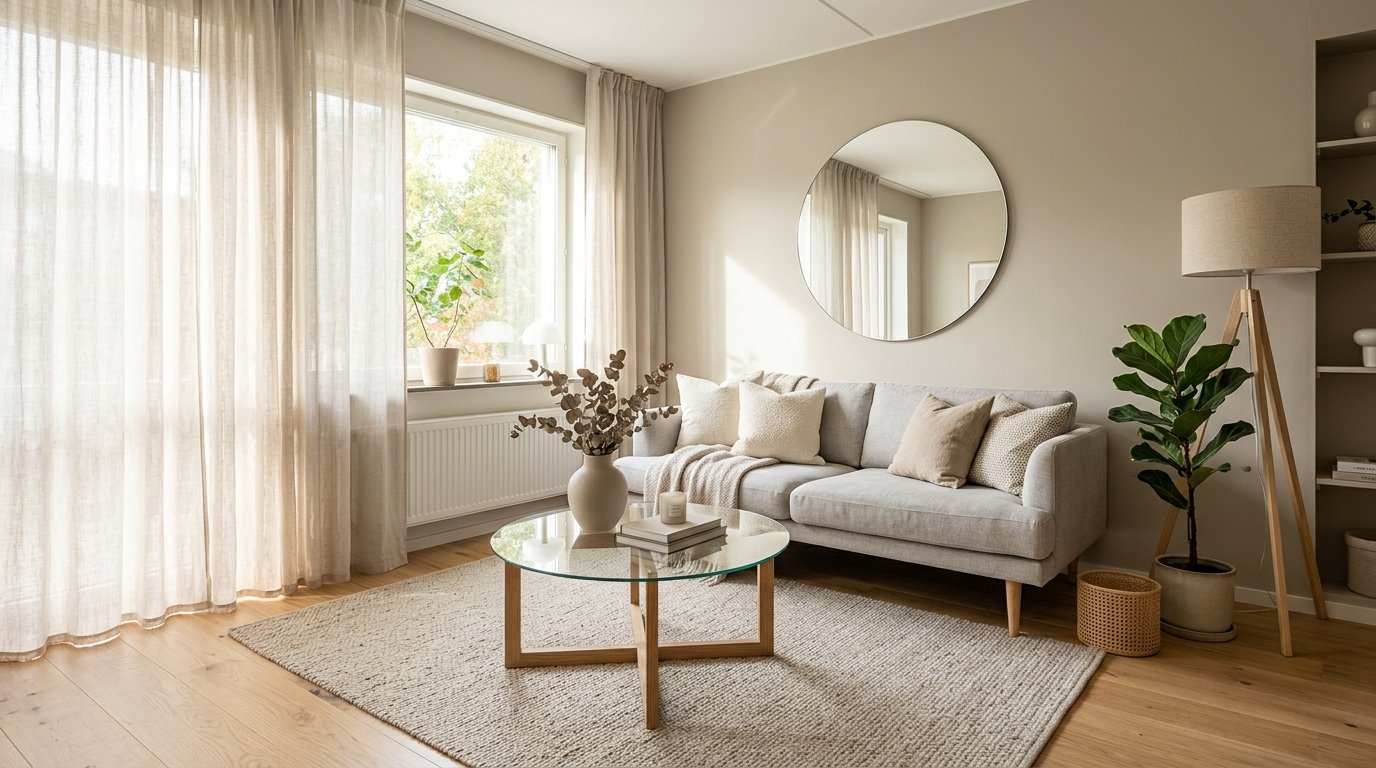
How to Make a Small Living Room Feel Larger: Architectural Principles & Visual Depth
Making a compact living room feel spacious is not about cramming tiny furniture into corners; it is about manipulating sightlines, preserving continuous floor visibility, and controlling light reflectance.
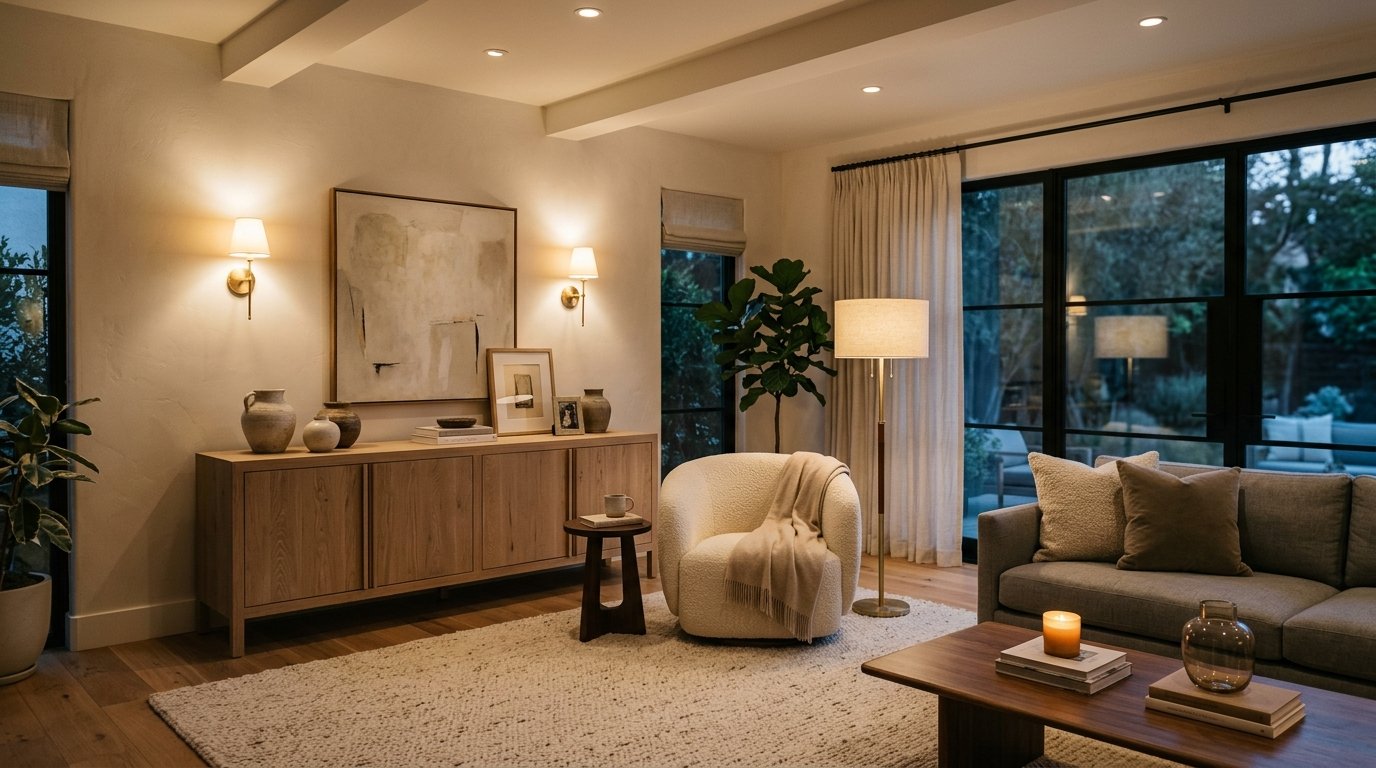
How to Choose the Right Lighting for Every Room: Kelvin, Lumens & Layering
Lighting is the most transformative yet frequently misunderstood element of interior design. Discover how to calculate lumens per room, balance color temperatures, and create a 3-layer lighting scheme.
Sustainable Interior Design Ideas for Modern Homes: Low-VOC & Circular Materials
Sustainable interior design is not about sacrificing luxury or visual elegance; it is about choosing durable, non-toxic materials with transparent lifecycles that safeguard indoor air quality and reduce environmental impact.
Practical Ideas for Better, Smarter Living
Join our readership of homeowners, spatial architects, and living enthusiasts. Receive thoughtful architectural breakdowns, energy-saving insights, and curated home guides every Thursday.