How to Create a Calm & Functional Bedroom: Sleep Science & Spatial Layout
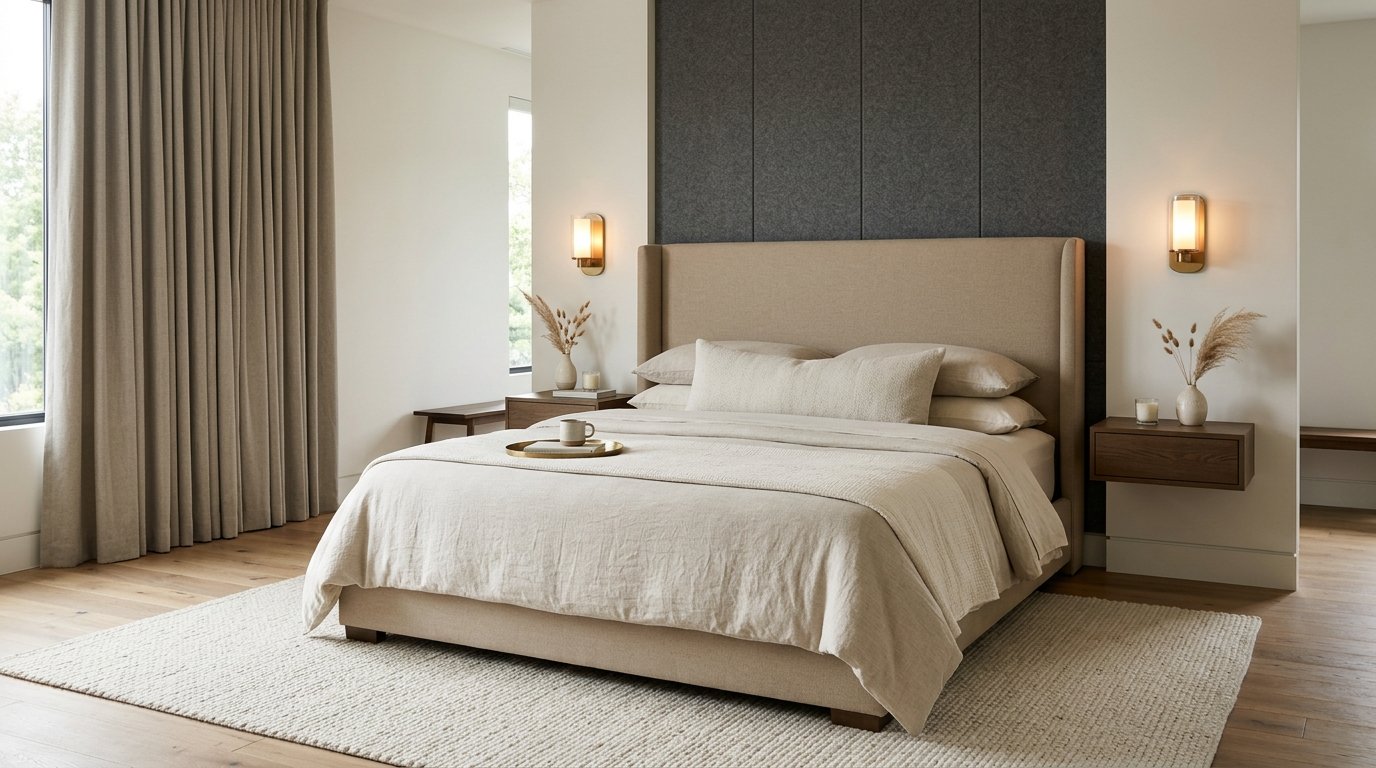
In many contemporary homes, the primary bedroom has become an overburdened multi-purpose zone: part home office, part laundry holding area, part television lounge. From a neuro-architectural perspective, visual clutter and blue-spectrum lighting elevate cortisol levels, directly impairing sleep architecture and circadian regulation. Designing a calm, functional bedroom requires curating sensory inputs—controlling acoustic resonance, blocking stray photon leakage, selecting breathable organic textiles, and zoning functional storage away from the primary sleep sightlines.
Acoustic Control: Eliminating Echo & External Decibel Spikes
Hard, reflective surfaces (bare hardwood floors, unadorned drywall, large glass panes) cause sound reverberation, amplifying neighborhood noise and household creaks.
To achieve optimal sound dampening (targeting ambient nighttime noise below 30 dB): - Lay a high-density wool rug with a 1/2-inch felt underlayment beneath the bed, extending at least 3 feet on all sides. - Install floor-to-ceiling lined drapery using high-weight velvet or triple-weave linen. - Consider an upholstered headboard or slatted acoustic felt wall panels behind the bed frame to absorb vocal-frequency reflections.
Circadian Lighting Protocols for the Bedroom
Exposure to 4000K+ blue-enriched light within 90 minutes of bedtime suppresses pineal melatonin production by up to 85%.
Structure your bedroom lighting into two operational modes: 1. Daytime / Dressing Mode: 2700K ambient recessed lights or ceiling flush-mount for wardrobe visibility. 2. Wind-Down Mode (1 Hour Pre-Sleep): 2200K–2400K low-lumen bedside sconces positioned below eye level (approx. 24–28 inches above mattress height), washing downwards to simulate sunset conditions.
Zero-Clutter Sightlines: Nightstand & Wardrobe Ergonomics
The first thing you see upon waking and the last thing you see before closing your eyes sets your neurological tone. Keep your primary bedtime sightlines completely clear of unread books, charging cords, and work documents.
Choose nightstands with closed soft-close drawers rather than open wire shelves. Install integrated rear-drawer power grommets to keep phone and watch charging cables completely out of sight.
- ✓Choose a nightstand with at least one concealed drawer for personal items.
- ✓Keep the top surface restricted to a lamp, a water carafe, and one decorative accent.
- ✓Utilize a discrete bed bench with internal storage for extra blankets and decorative pillows.
- ✓Position wardrobes or closet doors out of direct line of sight from the resting pillow.
Frequently Asked Questions
Expert clarifications and real-world considerations
Editorial Summary
A calm bedroom is the foundation of daily energy and mental clarity. By controlling acoustics with layered textiles, eliminating blue light in the evening, and concealing storage behind tailored millwork, your bedroom becomes the tranquil sanctuary your mind and body require.
Written by Elena Vance
Staff ContributorWith over 14 years in residential spatial planning and interior architecture, Elena specializes in small-space optimization, biophilic textures, and lighting design.
Related Architectural & Home Guides

How to Create an Energy-Efficient Bedroom: Thermal Comfort & Air Quality
Conditioning an entire 2,500 sq ft house to 66°F all night wastes massive energy. Discover how to create an energy-efficient sleeping micro-zone that optimizes sleep quality while minimizing power draw.
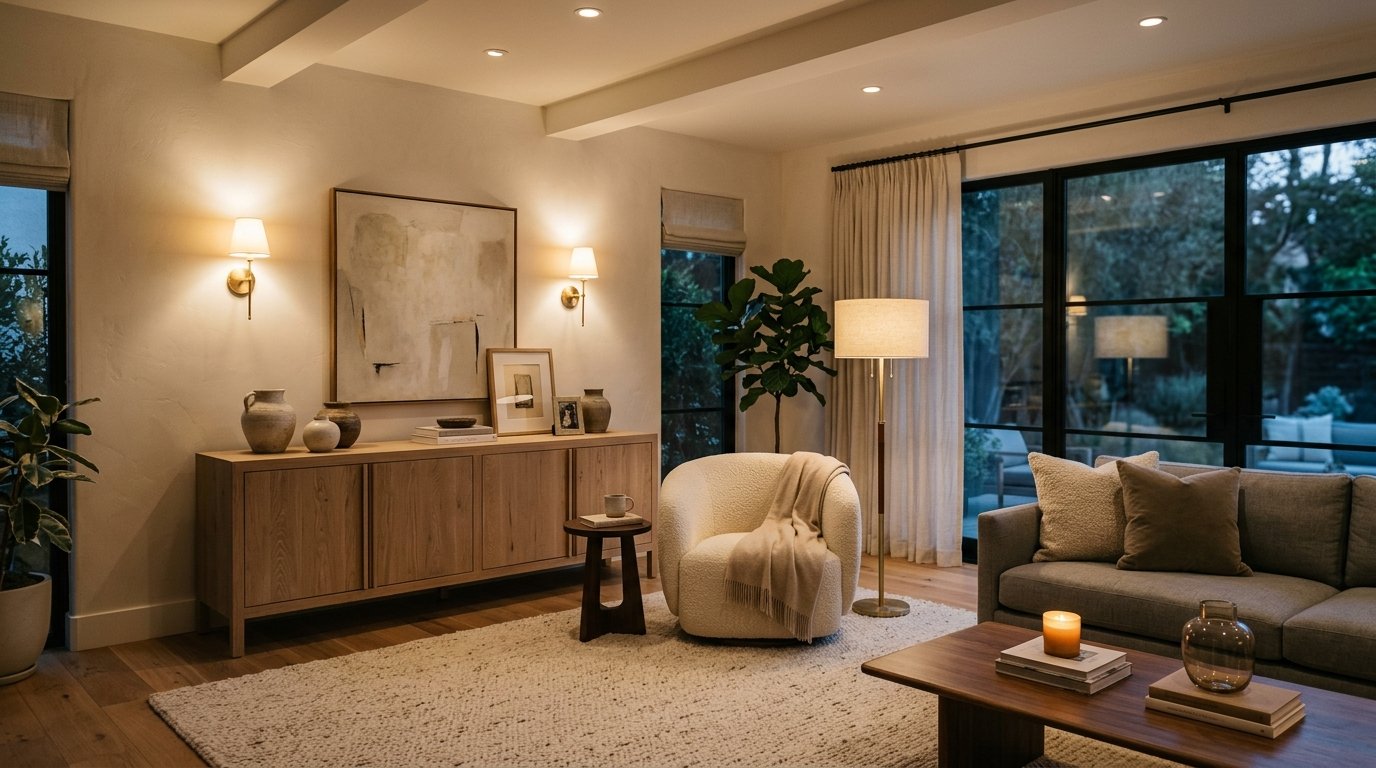
How to Choose the Right Lighting for Every Room: Kelvin, Lumens & Layering
Lighting is the most transformative yet frequently misunderstood element of interior design. Discover how to calculate lumens per room, balance color temperatures, and create a 3-layer lighting scheme.

Modern Interior Design Ideas That Still Feel Warm, Livable & Tactile
Modern design often gets unfairly labeled as cold, sterile, or clinical. By blending clean architectural lines with organic materials, tactile textiles, and warm ambient palettes, you can achieve a modern interior that feels calm, grounding, and deeply welcoming.
Practical Ideas for Better, Smarter Living
Join our readership of homeowners, spatial architects, and living enthusiasts. Receive thoughtful architectural breakdowns, energy-saving insights, and curated home guides every Thursday.