How to Choose Furniture for a Small Apartment: Multi-Functionality & Visual Mass
When furnishing an urban apartment or compact condominium (typically 400 to 750 sq ft), every single furniture purchase must justify its physical footprint. A piece of furniture that performs only one isolated function for 20 minutes a day (such as a massive 8-person formal dining table) wastes irreplaceable living space. Modern small-space living demands high-utility, multi-functional pieces, low visual mass, and clean geometric profiles that keep circulation pathways open and airy.
Visual Weight: Why Some Furniture Makes Rooms Feel Cramped
Two coffee tables can share the exact same 36x24-inch dimensions, yet one makes a room feel spacious while the other makes it feel suffocating:
- High Visual Weight (Avoid in Small Rooms): Solid blocky bases, dark opaque finishes, thick chunky legs, and heavy overstuffed upholstery that blocks light and line of sight.
- Low Visual Weight (Ideal for Small Rooms): Fluted glass or tempered glass tops, slender brass or tubular steel legs, woven cane details, and light oak or ash timber that allows light to pass through.
The Top Multi-Functional Furniture Categories
Invest in pieces engineered with secondary utility:
- Hydraulic Lift-Up Storage Beds: Replaces four dressers by utilizing the entire sub-mattress cavity (providing over 25 cubic feet of dust-free storage for off-season coats and luggage).
- Nesting Round Coffee Tables: A set of two overlapping round tables can be pulled apart during cocktail gatherings and nested together to clear floor space for yoga.
- Extendable Drop-Leaf or Gateleg Dining Tables: Compact 30-inch daily consoles that expand into 60-inch dinner tables when hosting guests.
High-Performance Small Apartment Furniture Matrix
| Furniture Item | Primary Daily Function | Secondary Built-In Utility | Space-Saving Benefit |
|---|---|---|---|
| Storage Ottoman Bench | Living room footrest / coffee table | Hidden linen / blanket storage | Eliminates separate storage chest |
| Hydraulic Lift Bed | Primary sleep mattress support | 25+ cu ft sub-bed holding vault | Replaces 2 bulky bedroom dressers |
| Nesting Side Tables | Casual beverage resting surface | Separates into 2 independent tables | Nests into single compact footprint |
| Wall-Mounted Drop Desk | Dedicated laptop work surface | Folds completely flush to wall (4") | Reclaims floor area outside work hours |
Frequently Asked Questions
Expert clarifications and real-world considerations
Editorial Summary
Furnishing a small apartment is a masterclass in intentional curation. Prioritize multi-functional utility, minimize visual weight with airy silhouettes, and select flexible pieces that adapt seamlessly to your daily lifestyle.
Written by Elena Vance
Staff ContributorWith over 14 years in residential spatial planning and interior architecture, Elena specializes in small-space optimization, biophilic textures, and lighting design.
Related Architectural & Home Guides
How to Make a Small Living Room Feel Larger: Architectural Principles & Visual Depth
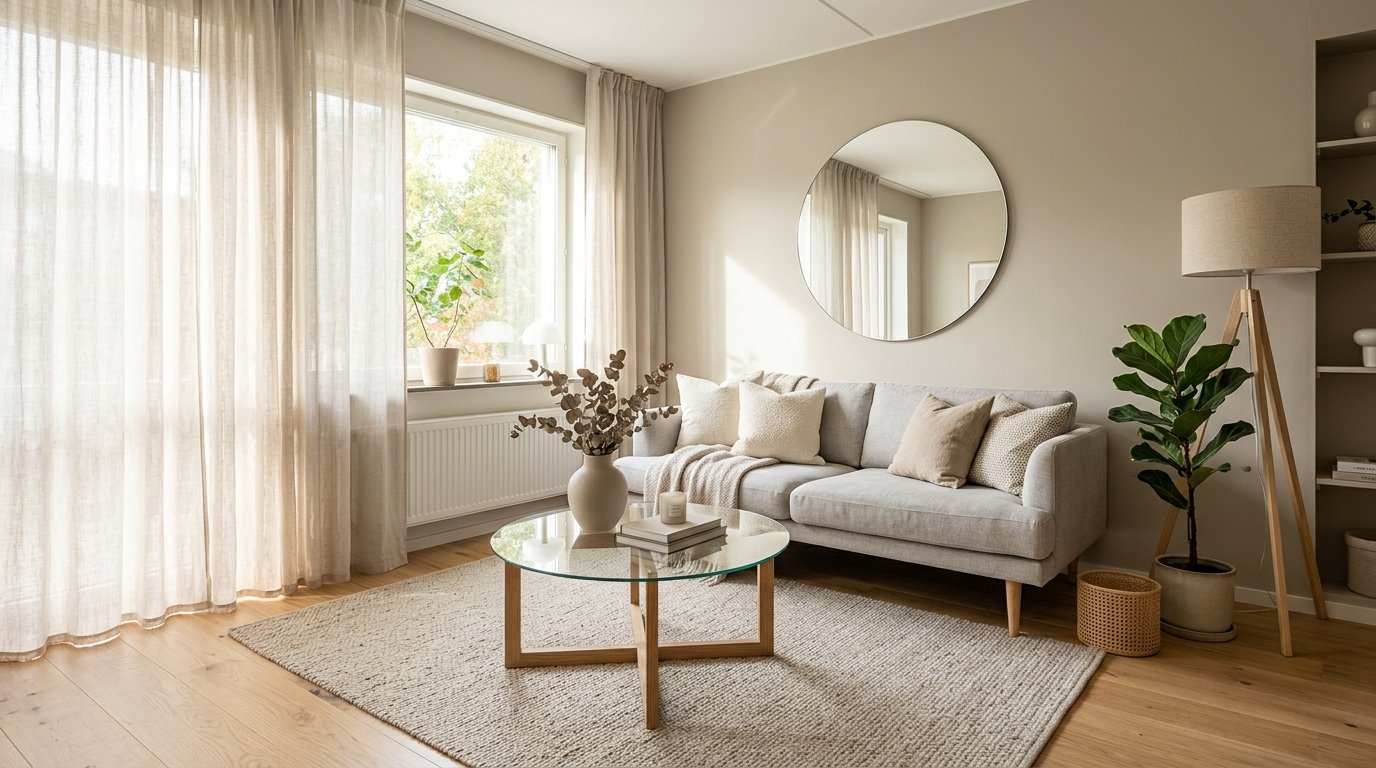
Making a compact living room feel spacious is not about cramming tiny furniture into corners; it is about manipulating sightlines, preserving continuous floor visibility, and controlling light reflectance.

Furniture Layout Mistakes That Make Rooms Feel Smaller: Spatial Geometry Guide
Pushing every piece of furniture against the perimeter walls is the most intuitive instinct for homeowners—yet it is the very mistake that makes rooms feel rigid, cramped, and uninviting.
Choosing the Right Rug Size for Your Living Room: Sizing Formulas & Placement
Buying a rug that is too small is the single most common decorating mistake in living rooms. Learn the exact sizing formulas and leg placement rules used by professional interior designers.
Practical Ideas for Better, Smarter Living
Join our readership of homeowners, spatial architects, and living enthusiasts. Receive thoughtful architectural breakdowns, energy-saving insights, and curated home guides every Thursday.