Beginner’s Guide to Smart Home Technology: Ecosystems, Protocols & Reliability
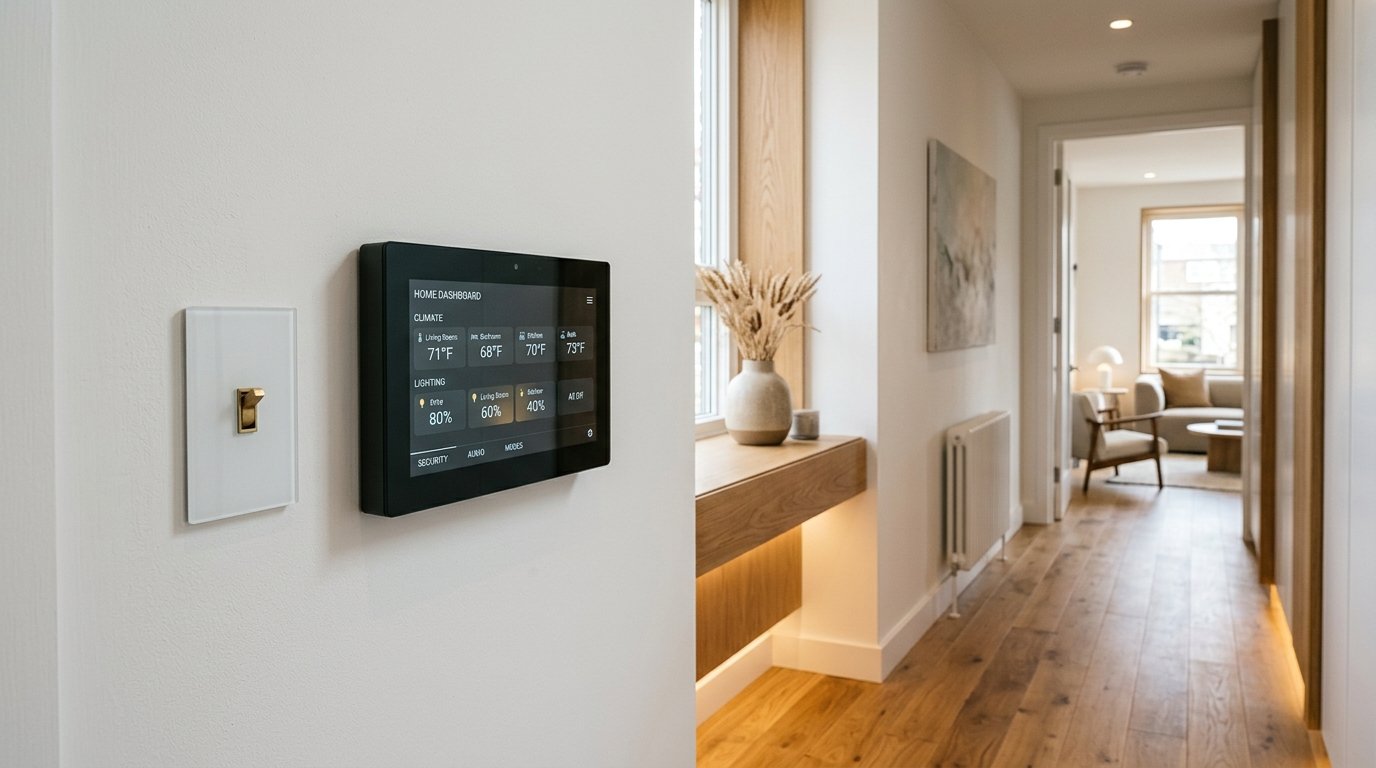
The modern smart home industry has undergone a massive evolution over the past several years. The early era of smart home gadgets—plagued by proprietary apps, endless Wi-Fi disconnections, cloud server shutdowns, and vendor lock-in—is being replaced by unified open standards and local-first execution. For homeowners beginning their automation journey, the priority must be reliability, local execution (ensuring light switches still work if internet service drops), and cross-platform interoperability. This guide breaks down the essential hardware pillars and network architecture required to build a seamless system.
Network Architecture: Why Wi-Fi Gadgets Overcrowd Your Router
A common beginner mistake is purchasing 40 individual Wi-Fi smart bulbs and Wi-Fi plugs. Standard consumer home Wi-Fi routers struggle to handle dozens of simultaneous 2.4 GHz IoT connections alongside streaming and laptops, resulting in high latency, dropped signals, and sluggish response times.
Modern smart homes rely on dedicated low-power mesh protocols: - Thread (IPv6 Mesh): Self-healing, low-latency, and operates without a proprietary hub. Any mains-powered Thread device (like an Apple TV 4K or HomePod) acts as a Thread Border Router. - Zigbee / Z-Wave (Dedicated Sub-GHz / 2.4GHz Mesh): Battle-tested, ultra-low power consumption for battery sensors (3–5 year coin-cell life), completely independent of your household Wi-Fi bandwidth.
Smart Home Wireless Protocol Comparison
| Protocol | Network Topology | Latency | Battery Sensor Life | Internet Dependency |
|---|---|---|---|---|
| Wi-Fi (2.4 GHz) | Star (direct to router) | Moderate (200–800 ms) | Poor (requires frequent recharge) | Often cloud-dependent |
| Zigbee 3.0 | Self-healing Mesh | Ultra-low (< 50 ms) | 3–5 years on CR2032 coin cell | 100% Local with hub |
| Z-Wave Plus (800) | Sub-GHz Mesh (908 MHz) | Ultra-low (< 40 ms) | 5–8 years on lithium battery | 100% Local (no Wi-Fi clash) |
| Thread (Matter) | IPv6 Self-healing Mesh | Instantaneous (< 20 ms) | 2–4 years | Local IP communication |
The Three Golden Rules of Bulletproof Home Automation
To prevent frustration for family members and houseguests, adhere strictly to these principles:
- The Physical Override Rule: Every smart light, lock, or shade must retain intuitive physical control. If a guest cannot walk into a bathroom and press a wall switch to turn on the light naturally, your design has failed.
- The Local Execution Rule: Core automations (motion sensors, door contacts, thermostat setbacks) must run on a local hub rather than sending data to cloud servers in another country.
- The Silent Automation Rule: The best smart home is invisible. Automated lighting ramps up softly at 2:00 AM for water trips rather than requiring shouting voice commands.
High-Impact Starter Automations to Begin With
Start small with automations that deliver immediate daily convenience:
- Automated Entryway Illumination: A magnetic door contact sensor on the front door automatically turns on the hallway sconces at 2700K when the door opens between sunset and sunrise.
- Automated Water Leak Detection: Place sub-$20 wireless moisture sensors under water heaters, washing machines, and sink supply valves paired with an automatic motorized main shutoff valve.
- Adaptive Circadian Lighting: Smart bulbs that shift their Kelvin temperature automatically from crisp 4000K at 10:00 AM to relaxing 2200K at 8:30 PM.
- ✓Choose your primary control ecosystem: Apple Home, Home Assistant, Google Home, or Amazon Alexa.
- ✓Deploy a Thread Border Router or Zigbee coordinator hub.
- ✓Start with 2–3 smart wall switches rather than replacing 20 individual light bulbs.
- ✓Install at least two water leak detectors near major plumbing fixtures.
Frequently Asked Questions
Expert clarifications and real-world considerations
Editorial Summary
A successful smart home enhances comfort, security, and energy savings quietly in the background. Prioritize local-first protocols, preserve physical switches for family ease, and scale your system deliberately with open standards like Matter and Thread.
Written by Julian Mercer
Staff ContributorJulian covers open-source home automation, Matter/Thread wireless architectures, HVAC multi-zone relays, and privacy-first local smart ecosystems.
Related Architectural & Home Guides

Matter and Thread Smart Home Protocol Guide: Architecture & Real-World Setup
The promise of Matter is universal smart home compatibility across Apple, Google, Amazon, and Home Assistant. Learn how Thread and Matter function together and how to build an ultra-resilient setup.
Smart Thermostats and HVAC Zoning: Precision Climate Engineering
A central thermostat in an unrepresentative hallway causes hot upstairs bedrooms and freezing ground floors. Discover how remote sensors and smart HVAC staging balance comfort and energy use.

How to Choose the Right Lighting for Every Room: Kelvin, Lumens & Layering
Lighting is the most transformative yet frequently misunderstood element of interior design. Discover how to calculate lumens per room, balance color temperatures, and create a 3-layer lighting scheme.
Practical Ideas for Better, Smarter Living
Join our readership of homeowners, spatial architects, and living enthusiasts. Receive thoughtful architectural breakdowns, energy-saving insights, and curated home guides every Thursday.