Smart Ways to Declutter Your Home: Behavioral Psychology & Spatial Auditing
Most people approach decluttering through episodic bursts of frantic weekend purging, only to find their closets and drawers overflowing again three months later. This occurs because traditional decluttering treats the symptom (excess physical items) rather than the root cause: cognitive friction in decision-making and a lack of defined spatial boundaries. Sustainable household organization relies on environmental psychology—implementing the "Container Concept," overcoming the Sunk Cost Fallacy of unused purchases, and establishing simple sorting protocols.
The Container Concept: Hard Physical Boundaries
Popularized by organizing theorists, the Container Concept redefines storage bins, closets, and shelves as hard physical limits rather than infinite expansion devices.
A bookshelf is not a place where you must squeeze every book you have ever bought; it is a defined container that holds 40 books. When the shelf is full, the container has reached capacity. To add a new book, you must choose which existing book to donate or pass along. Applying this container boundary across wardrobes, linen closets, and kitchen utensils eliminates passive item accumulation permanently.
Overcoming the "Sunk Cost Fallacy" of Unused Items
The greatest barrier to decluttering is emotional guilt: *"I paid $250 for this jacket, so I cannot get rid of it even though it doesn't fit."*
In behavioral economics, this is known as the Sunk Cost Fallacy. The money was spent the moment you bought the item—it is gone forever. Keeping an unused, ill-fitting item inside your closet does not recover the money; it only charges you a secondary "rent" in visual guilt, daily frustration, and lost spatial peace.
- ✓Sort items into four clear bins: Keep, Donate/Sell, Recycle, and Relocate.
- ✓Execute the "12-Month Rule": If you have not used an item in four full seasons, release it.
- ✓Use the "Hanger Flip Method" in closets: Turn all hangers backward and flip forward only after wearing an item to visually track un-worn clothing.
- ✓Establish a permanent donation tote bag in the laundry room for continuous drop-ins.
Frequently Asked Questions
Expert clarifications and real-world considerations
Editorial Summary
Decluttering is an act of curating your living environment for who you are today, not who you were five years ago. Honor your container boundaries, let go of sunk-cost guilt, and enjoy the profound mental freedom of a calm, organized home.
Written by Claire Sterling
Staff ContributorClaire investigates functional household workflows, modular millwork, pantry zoning ergonomics, and sustainable decluttering strategies.
Related Architectural & Home Guides
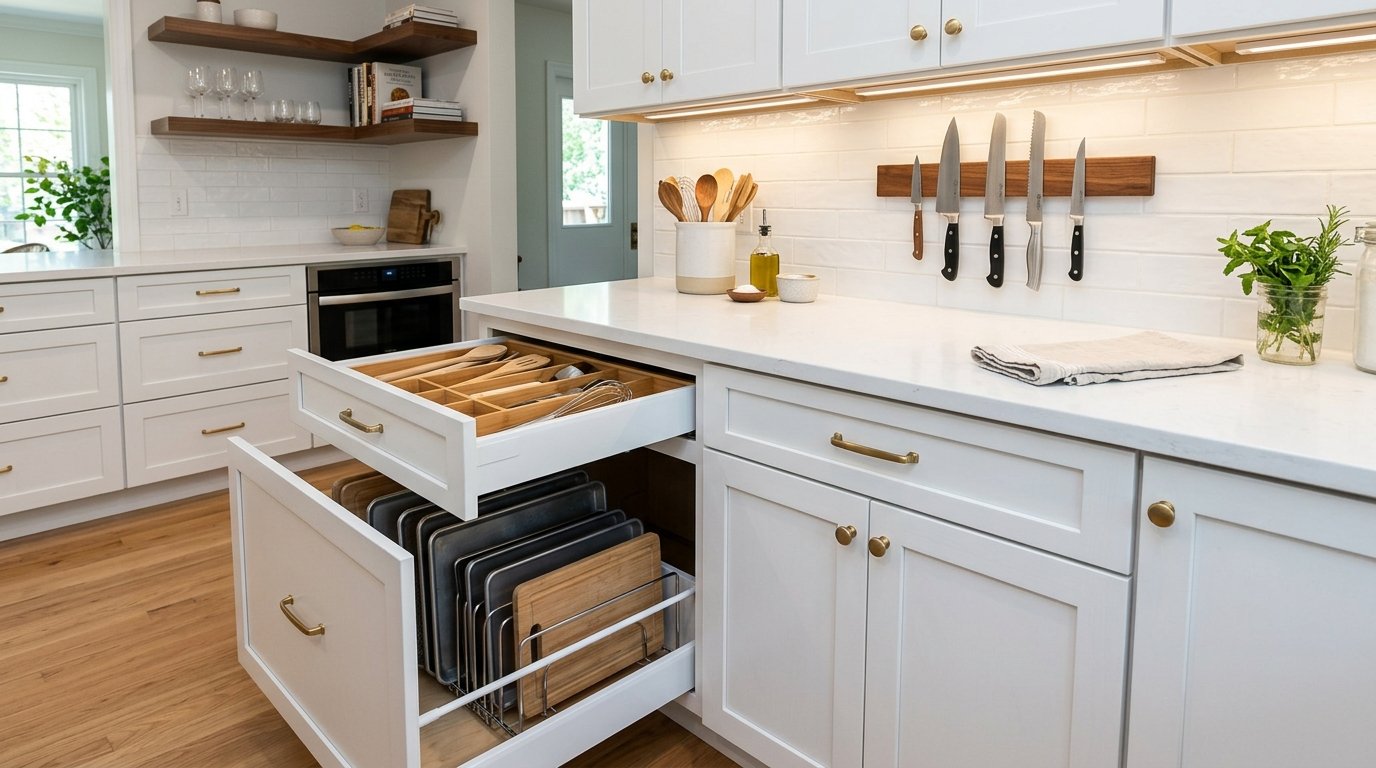
Small Kitchen Storage Ideas That Actually Work: Ergonomics & Vertical Millwork
Compact kitchens fail when items become buried in deep, dark lower cabinets. Discover how ergonomic drawer retrofits, vertical baking sheet dividers, and clear counter protocols reclaim your kitchen.
How to Organize a Small Entryway: Drop Zones & Vertical Wall Systems
The entryway is your home’s highest-friction transition zone. Learn how to design a high-capacity, low-profile drop zone that keeps keys, shoes, coats, and mail effortlessly organized.
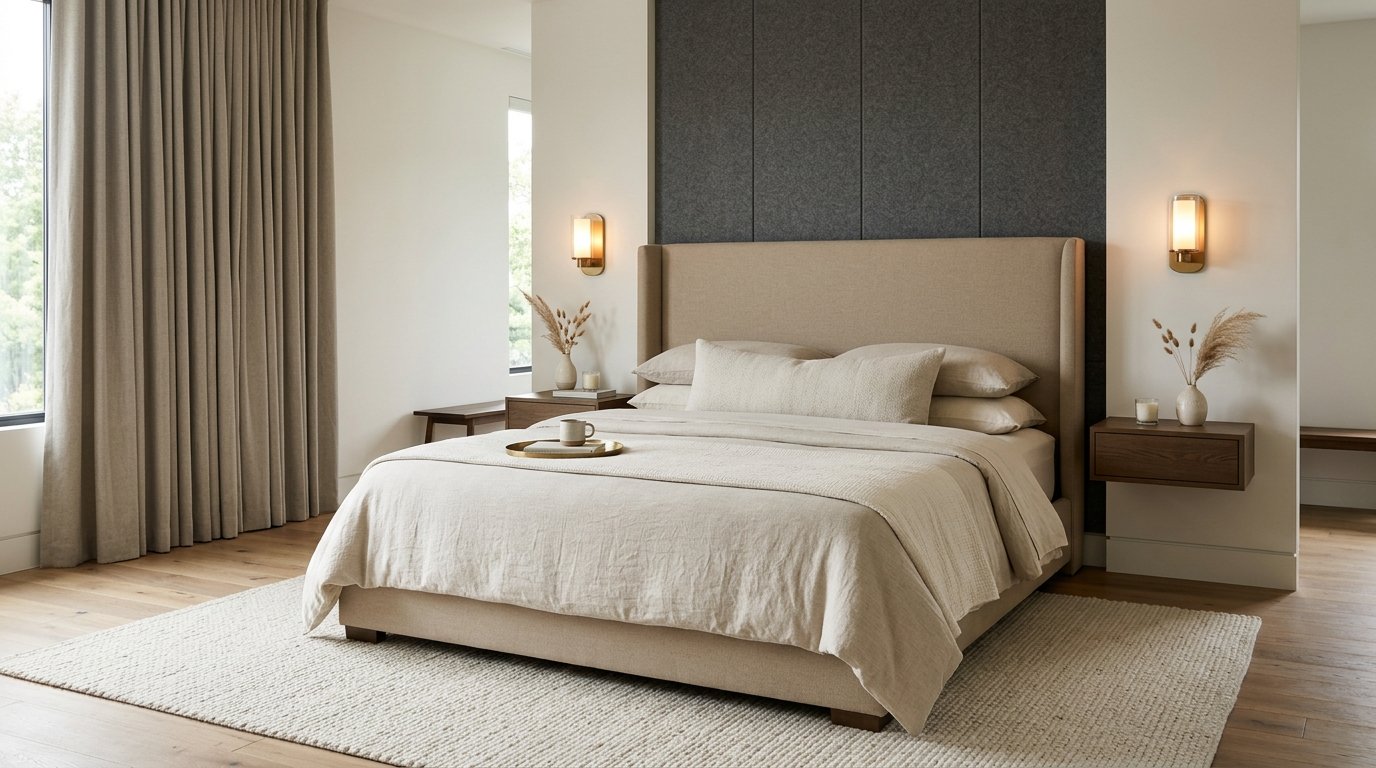
How to Create a Calm & Functional Bedroom: Sleep Science & Spatial Layout
A bedroom should function primarily as a restorative sanctuary for physical recovery and cognitive rest. Here is how sleep science and interior architecture merge to create a tranquil, clutter-free bedroom.
Practical Ideas for Better, Smarter Living
Join our readership of homeowners, spatial architects, and living enthusiasts. Receive thoughtful architectural breakdowns, energy-saving insights, and curated home guides every Thursday.