Energy-Efficient Home Improvements That Can Significantly Reduce Household Energy Use
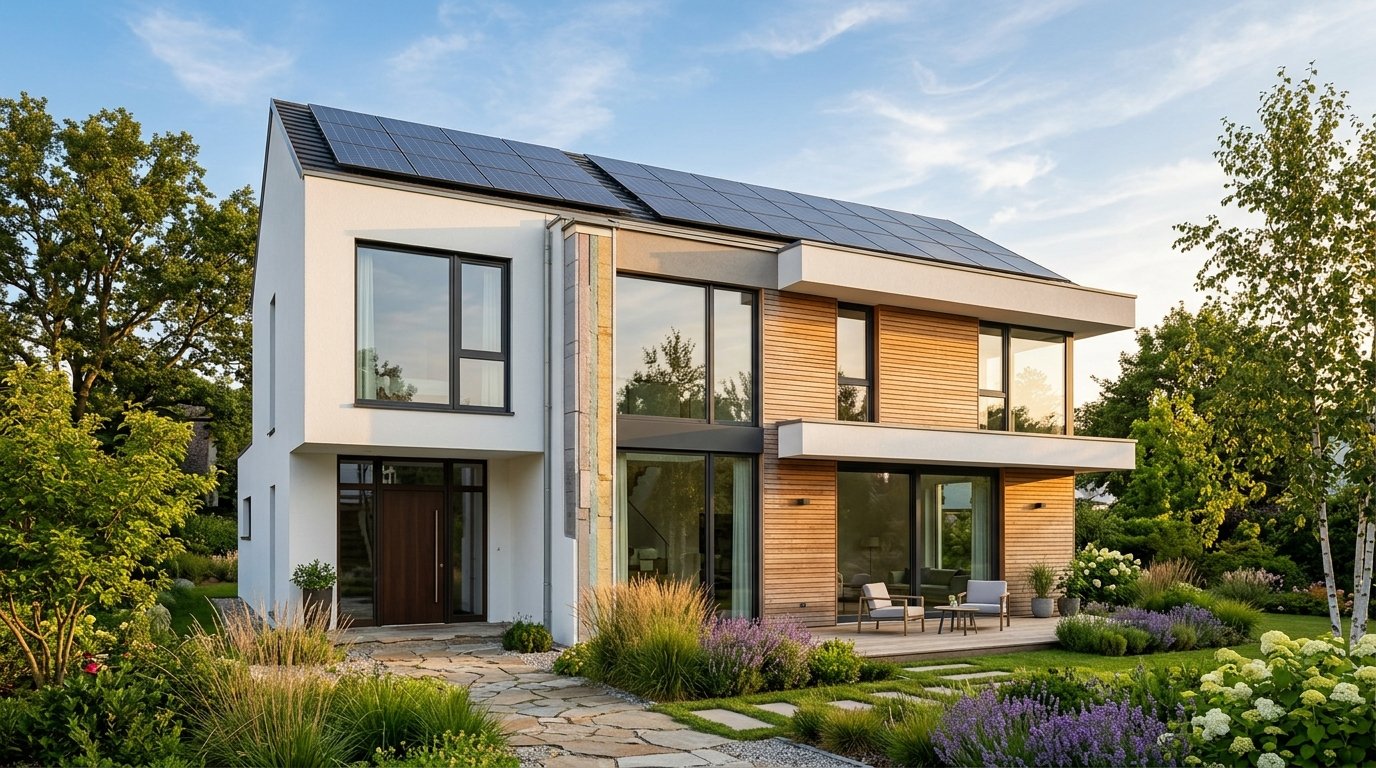
In residential building science, the most critical concept is the "Order of Operations." Many well-intentioned homeowners spend tens of thousands of dollars on rooftop photovoltaic solar panels while living in an unsealed, poorly insulated home. Generating clean electricity on the roof only to have 40% of conditioned indoor air escape through unsealed attic penetrations is fundamentally inefficient. By first reducing thermal demand through air sealing, continuous insulation, and high-efficiency heat pump systems, you minimize the total energy your home requires to stay comfortable year-round.
The "Envelope First" Strategy: Stopping Infiltration
A home’s thermal envelope consists of the conditioned boundary separating indoor air from outdoor weather: the foundation, exterior walls, windows, doors, and ceiling/roof deck.
Air leakage (measured in Air Changes per Hour at 50 Pascals, or ACH50) accounts for up to 35% of total heating and cooling loss in typical older homes. A standard 2,000 sq ft home with 7 ACH50 leaks enough air to equate to leaving a 2-foot square window wide open 24 hours a day during a snowstorm.
Conducting a professional Blower Door Test with Infrared Thermography pinpoints unsealed top plates, recessed lighting cans, plumbing chases, and rim joists, allowing targeted polyurethane spray foam and acoustic caulk sealing before adding loose-fill insulation.
Cold-Climate Inverter Heat Pumps vs. Legacy Furnaces
Traditional natural gas or oil furnaces generate heat through combustion, operating at a maximum theoretical Annual Fuel Utilization Efficiency (AFUE) of 90% to 98%. That means for every $1.00 of fuel burned, you receive at most $0.98 of heat.
Modern variable-speed inverter air-source heat pumps do not create heat; they transfer thermal energy from outside air into your home. Even in freezing conditions (-15°F / -26°C), cold-climate heat pumps operate with a Coefficient of Performance (COP) between 2.5 and 3.8, delivering $2.50 to $3.80 worth of heat for every $1.00 of electricity consumed.
Heating System Efficiency & Operational Comparison
| Heating Technology | Efficiency Rating (AFUE / COP) | Seasonal Operating Cost Factor | Carbon Footprint |
|---|---|---|---|
| Legacy Gas Furnace | 80% AFUE | High (20% heat lost via flue) | High (fossil combustion) |
| Modern Condensing Gas | 95–98% AFUE | Moderate | Moderate to High |
| Standard Electric Resistance | 100% (COP 1.0) | Extremely High (grid-heavy) | Dependent on grid mix |
| Inverter Heat Pump (Cold Climate) | 250%–380% (COP 2.5–3.8) | Lowest across 4 seasons | Lowest (zero on-site emissions) |
Hybrid Heat Pump Water Heaters (The Silent Energy Saver)
Domestic water heating is typically the second-largest energy consumer in a home, representing 18% of total utility bills. Standard electric resistance tank water heaters consume approx. 3,500 to 4,500 kWh annually.
Replacing a conventional electric water heater with a Hybrid Heat Pump Water Heater (HPWH) with a Uniform Energy Factor (UEF of 3.5 to 4.0) cuts electrical consumption for hot water by up to 70%, saving $350–$450 every year while providing free basement dehumidification as a byproduct.
- ✓Verify your mechanical room has at least 700 cubic feet of surrounding air space or can be ducted.
- ✓Ensure a condensate drain line or condensate pump is installed.
- ✓Set operational mode to "Hybrid / Heat Pump Only" for maximum efficiency.
Frequently Asked Questions
Expert clarifications and real-world considerations
Editorial Summary
True residential energy efficiency follows a disciplined sequence: seal the building envelope first, upgrade thermal insulation second, electrify heating and water systems with high-COP heat pumps third, and install solar arrays to offset the remaining minimized load.
Written by Marcus Holt, CEM
Staff ContributorMarcus is a Certified Energy Manager focused on residential building envelopes, heat pump retrofits, passive thermal retention, and smart grid appliances.
Related Architectural & Home Guides

Practical Ways to Improve Home Insulation: R-Values, Materials & Attic Sealing
Insulation is your home’s thermal overcoat. Learn how to diagnose insulation deficits, select the right materials for each assembly, and prevent moisture condensation.
How to Reduce Heat Loss Through Windows and Doors: Glazing, Seals & Weatherstripping
Windows and exterior doors represent up to 25% of total residential thermal loss. Discover cost-effective retrofits and architectural glazing specifications that stop drafts cold.

How to Choose Energy-Efficient Appliances: Energy Star, Lifecycles & Real ROI
Modern appliances vary wildly in lifetime electrical consumption. Learn how to look past cosmetic marketing to calculate actual kilowatt-hour savings across refrigerators, laundry, and cooking.
Practical Ideas for Better, Smarter Living
Join our readership of homeowners, spatial architects, and living enthusiasts. Receive thoughtful architectural breakdowns, energy-saving insights, and curated home guides every Thursday.